Welcome to my home on the interweb!


Eventually this page will be host to totally awesome lensflares, 3d tunnels, animated GIFs and other materials which pave the gateway to hell. In the mean time, feel free to check out my Projects, Tutorials and Galleries. More to follow as I get the chance.

This site has been hand coded in PHP, CSS and XHTML using NOTEPAD for your enjoyment. Graphics and pixel-art were created in Adobe Photoshop (Windows) and The Gimp (Linux). Project and Tutorial images were shot using a Fuji FinePix S7000 with a tripod. Available videos were likely shot by the same camera in VGA video mode, or a Nokia N95 in MP4 mode.
New website (UltraKeet.com.au) launched!
Wednesday, August 5th 2009 @ 00:28:03 AEST


I've finally completed and launched my new website and eStore at http://www.ultrakeet.com.au!

There's a host of new articles, high definition videos and a nice, dark colour scheme to boot. You should check that site out after you're done here, as it's updated far more often. Oh and don't forget to take a look at my Youtube channel for more pornographicly awesome electronics videos (also some cameo appearances by various birds, birds rock!)
Engineering Project (SpotWelder / Discharge Cutter) complete!
Sunday, July 5th 2009 @ 13:30:39 AEST


I've been working on a cheapie capacitive-discharge spot-welder for battery tabs over the past couple of weeks, during time off work for various reasons. I was inspired by a few youtube videos, and figured I had alot of parts left over from previous projects.

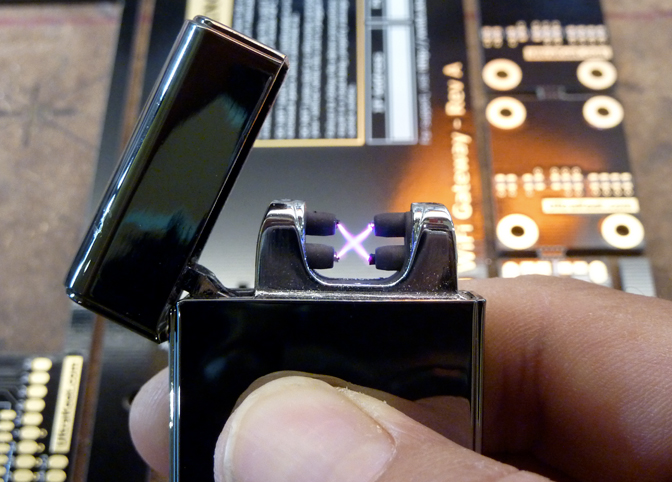
It now doubles as a discharge-cutter for thinner sheetmetals and copper flashing, it also "etches" blank copper-clad PCB material really well, any MAY be suitable for use on a reprap/CNC assembly with the right cutting head (Thoriated/Zirconiated tungsten doesnt' work terribly well for this application, a silver alloy "welding rod" style composition works flawlessly though. Check out the new youtube video at the bottom of the page!

Fondle the left mouse button on the image above to view ;)
Tutorial (uberCREE) uploaded!
Monday, April 6th 2009 @ 20:50:58 AEST


Hack your SpiderFire CREE LED torch into submission!

I've uploaded a new tutorial on how to hack your CREE torch to run on one less battery *AND* make it rechargeable to boot. All PCB artwork is free for download, and there are plenty of photos taken every step of the way to help you out. Click on the image above to view the tutorial!
Software Project (picoVNC) completed!
Saturday, February 28th 2009 @ 01:38:22 ADST


Not satisfied with existing FREE single-click reverse-VNC solutions, I created my own and released it free for everyone!

Run your favourite VNC client in listenning mode, then log onto http://www.picovnc.com and follow the instructions to create a PIN number. Then tell your guest/target/victim/client to enter that pin at http://rescue.picovnc.com, and then run the file when prompted:


DONE! My script automatically MODIFIES THE EXECUTABLE and embeds your IP, PORT, PINCODE and the CLIENTS NAME. Everything is done automatically, no mess, no subscription, no crap. Each pincode creates a custom executable, which can then be re-used in the future without needing to visit the site again!

Okay, so it's not THAT cool, but it works well under XP and Vista.
Enginering Project (SRAM Tester) completed!
Wednesday, December 31st 2008 @ 14:08:22 ADST


Just in time for the new year, ERG's dsPIC30F6014A-based Static RAM tester has been fully engineered and tested. This was an interesting one, as I've never actually interfaced to SRAM before, however I sure as hell will start interfacing to them in the future!

The board you see above took a total of three design iterations to get to a 100% working state. The SRAM modules under test are Hitachi HM62851BL and Hynix 62256A (4MBit and 256KBit respectively), the Hynix being compatible with 3v3 CMOS logic, and the Hitachi claiming to be, but ultimately not.

The output of the test is displayed via three TriColour debug LEDs as well as debug output via RS232 (menu options are also accessible via RS232, ie: chip select and test abondonment). The SRAM is tested on a byte level, with each byte being written once, verified, written inverted, verified, then proceeding to the next byte.

Once the entire chip has been written twice (with inversions), a simple PASS or FAIL is issued via RS232 and the debug LEDs. More details to come!
Enginering Project (Remote Engine Start) completed!
Thursday, August 7th 2008 @ 21:47:39 AEST


I finally engineered something I've envied for oh-so-long - a remote engine start circuit!

That's right! My trusty ex-telstra tradie van now starts via remote thanks to the beastie circuit above. It's a little over-engineered (I mean a dsPIC just to measure PWM and trip a couple of relays?!?!) - but if it's worth doing, it's worth over-doing right?

So it's a smart circuit, not a dumb "timer based" POS like those found in cheaper alarms. When a button is depressed on the remote, it plays four beeps through the siren, one each second, each at a higher frequency than the last. After 5 seconds total, the siren chirps, and the engine start routine is started. The routine is as follows:
  • The ingnition is turned on
  • The dsPIC waits for the cars ECU to fully switch on
  • The engine is then cranked
  • The dsPIC measures the pulse width on a tacho/FI line and waits for a "cranked" condition (ie: engine >= 400rpm)
  • If no start condition is met for 5 seconds, the dsPIC cuts the ignition and stops cranking the engine
  • The process is repeated twice, upon failure, the siren chirps twice indicating engine failure and aborts
  • On success, the siren chirps once, and the engine continues running for a pre-defined time (60 seconds) or until a key is inserted in the ignition.
Cool huh? More details to follow... eventually.
New ENGINEERING PROJECT acquired!
Monday, March 18th 2008 @ 19:31:04 AEST

Tallal Mostafa of BFS Constructions has exciting new project ideas in need of engineering. After some short discussions, a huge amount of components have been ordered and prototyping has begun! Unfortunately, I can't speak about the devices functions (yet) - look forward to a dedicated project page when the time is right though.